
Indian benchmark indices Sensex and Nifty experienced a significant slump in early trade, mirroring a sharp decline in global equities and a fresh spike in crude oil prices, exacerbated by simmering tensions in West Asia and a global unwinding of the AI-led rally. Track how sensex, Nifty fared on June 8.

Indian benchmark indices Sensex and Nifty rebounded in early trade, driven by strong buying in blue-chip stocks and positive cues from Asian markets, following a significant selloff in the previous session.

Indian benchmark indices, Sensex and Nifty, extended their losses for a second consecutive day, primarily due to HDFC Bank's disappointing quarterly earnings and escalating tensions in West Asia, coupled with persistent foreign fund outflows.

Tata Group stocks experienced a significant decline, with TCS falling nearly 6 per cent, after Tata Sons Chairman N Chandrasekaran announced he would not seek reappointment when his current term concludes on February 20, 2027.
Indian benchmark indices Sensex and Nifty experienced declines due to a sharp rally in crude oil prices, continuous foreign fund outflows, and geopolitical uncertainties. Regulatory developments in the banking sector, particularly the implementation of the Expected Credit Loss (ECL) framework, also contributed to the selling pressure.

'At the end of the day, it is just another technology produced by the human mind.'

Indian insurance companies are bracing for reduced profitability in Q4FY26, primarily due to the rationalisation of GST on retail life and health policies, leading to a loss of input tax credit, coupled with volatility in equity markets impacting investment income.

'The day is not too far when the share of MFs alone will be greater than that of foreign institutional investors.'

Indian benchmark indices Sensex and Nifty experienced a significant decline in early trade, with the Sensex falling over 500 points and the Nifty over 150 points, as Brent crude oil prices surged past USD 100 per barrel due to escalating geopolitical tensions in the West Asia. track sensex, Nifty on July 24.

...exceeding their 49,340 crore equity selloff.

Indian benchmark indices, Sensex and Nifty, closed higher, primarily driven by bank stocks and encouraging US inflation data, which fuelled expectations of a less aggressive Federal Reserve monetary policy. However, escalating US-Iran hostilities tempered investor sentiment, leading to some profit-taking.

Morgan Stanley analysts, led by Ridham Desai, predict that the next phase of the Indian market rally will be primarily driven by the April-June quarter (Q1FY27) corporate earnings season and the performance of the monsoon.

Indian benchmark indices Sensex and Nifty surged significantly in early trade, tracking a global rally fueled by US President Donald Trump's declaration of an end to the war with Iran and a subsequent drop in crude oil prices.

A sophisticated cross-bank syndicate is systematically defrauding non-resident Indians (NRIs) and elderly citizens by exploiting their fixed deposits through forged documents and fictitious loans, often involving colluding bank employees and real estate deals.

Indian benchmark indices, Sensex and Nifty, opened in positive territory, primarily driven by a strong performance in IT stocks, sustained foreign fund inflows, and a dip in global crude oil prices, despite a hawkish stance from the US Federal Reserve. Track Sensex, Nifty on July 30.

Foreign portfolio investors have started 2026 on a cautious note, extending their selling streak from last year by withdrawing Rs 7,608 crore ($846 million) from Indian equities in the first two trading sessions of January. The withdrawal of funds followed the largest outflow of Rs 1.66 lakh crore ($18.9 billion) recorded in 2025, triggered by volatile currency movements, global trade tensions and concerns over potential US tariffs, and stretched market valuations.

'When I look at India's relative valuations, these are by far the lowest I have seen in my 35-year career.' 'The relative 12-month trailing performance is among the weakest I have seen, and foreign investor positioning is at a 16-17 year low.'

Several Indian real estate companies, including BPTP Ltd and Smartworld Developers, are rethinking or shelving their initial public offering (IPO) plans, which were expected to raise around 15,000 crore, due to weaker housing demand, higher costs, and a more cautious investment climate.
Indian benchmark stock indices, Sensex and Nifty, recorded their fourth consecutive day of declines, driven by selling in FMCG, financial, and auto sectors. The downturn is attributed to fresh tensions in the Middle East, uncertainty surrounding the US-Iran 60-day ceasefire, and elevated crude oil prices.

The RBI once again said the Tata group holding company's application for deregistration as an NBFC remains under examination.

Indian benchmark equity indices, Sensex and Nifty, saw early gains driven by strong buying in blue-chip bank stocks, fresh foreign fund inflows, and a decline in global crude oil prices, boosting investor confidence.

The value of foreign portfolio investment (FPI) in Indian equities was at $542 billion in the March quarter of 2023, a decline of 11 per cent from the preceding year, largely due to the exodus of foreign money from the domestic market, according to a Morningstar report. In comparison, the value of FPI in Indian equities was $612 billion in the January-March quarter of 2022. On a quarter-on-quarter basis, the value of FPI in Indian equities fell by 7 per cent from $584 billion recorded in the three months ended December 2022.
Indian benchmark indices Sensex and Nifty saw a significant rebound in early trade, driven by softer-than-expected US inflation data which has reinforced expectations of a less aggressive monetary policy stance from the Federal Reserve, providing relief to global risk assets.

Accenture's revised annual revenue growth forecast and weaker-than-expected fourth-quarter guidance have sent shockwaves through the Indian IT sector, causing major IT stocks and the Nifty IT index to tumble significantly.

Indian benchmark indices Sensex and Nifty rallied in early trade, primarily driven by strong buying in IT stocks after Tech Mahindra reported a significant 28.4 per cent rise in its consolidated net profit for the June quarter.

Pre-listing shareholder lock-ins for 53 companies, valued at $11 billion, are set to expire between July and September, according to an analysis by Nuvama Institutional Equities, though not all shares are expected to flood the open market.
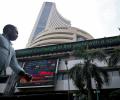
Indian benchmark indices, Sensex and Nifty, saw early gains, primarily driven by IT stocks, amidst expectations of a less aggressive monetary policy from the US Federal Reserve following softer inflation data. Global market trends and upcoming Q1 results are also influencing investor sentiment. Track Sensex, Nifty on july 16.

Earlier, most investors counted on traditional options like fixed deposits, gold, or property. But in 2026, you will have access to a much wider range of opportunities across different markets and sectors.

Indian benchmark indices, Sensex and Nifty, closed lower due to profit-taking after a four-day rally, influenced by weakness in Asian markets, with Trent shares tumbling over 12 per cent.

A new era of Indian equity market outperformance compared to China "appears to be dawning", according to Morgan Stanley. The firm has upgraded India to overweight in its Asia Pacific-excluding Japan (APxJ) list, making it their most preferred market not only in the region but also in the global emerging market (GEM) pack. India now holds the top position in this category, with an overweight of 75 basis points, a significant increase from nil previously.

Foreign investors have largely been exiting one part of the market while domestic investors have been enthusiastically accumulating another, points out Debashis Basu.
After declining for three consecutive quarters, the value of FPI investment in Indian equities rose 8 per cent quarter-on-quarter to $566 billion in the July-September period, according to a Morningstar report on Wednesday. A fast-changing global macroeconomic landscape, sentiments and opportunities that the Indian equity markets have to offer impacted the direction of flows by Foreign Portfolio Investors (FPIs). Through the quarter, the value of the FPI holdings in domestic equities surged by 8 per cent to $566 billion from $523 billion recorded in the previous quarter.

The Indian equity markets have significantly increased in importance within the emerging market (EM) basket of stocks in recent years. Since 2018, India's weighting in the Morgan Stanley Capital International (MSCI) EM Index - tracked by passive funds with assets of nearly $500 billion - has doubled, while the number of domestic stocks has grown by almost 70 per cent.

Foreign investors have withdrawn over Rs 88,000 crore from Indian equities this month, driven by geopolitical tensions, a weak rupee, and concerns about rising crude oil prices.
Indian stock markets concluded Tuesday's trading session lower, reversing intraday gains due to late-session selling in blue-chip stocks like HDFC Bank and Reliance Industries. The decline was primarily driven by the Indian rupee hitting a new record low against the US dollar and elevated global crude oil prices, compounded by geopolitical uncertainties.
Indian stock markets ended a five-day losing streak, with the Sensex surging 776 points and the Nifty gaining 228 points, driven by a significant drop in crude oil prices and easing geopolitical tensions in West Asia.
Indian benchmark equity indices, Sensex and Nifty, saw gains in early trade, driven by strong performance in banking shares and positive sentiment from Asian markets, alongside optimism surrounding the ongoing US-China Summit.

If you do not insulate your retirement corpus from the true cost of modern critical care, you don't have a retirement plan -- you have a fragile strategy waiting for an expensive medical emergency to break it

Indian benchmark indices Sensex and Nifty closed marginally lower due to profit-taking, following the Reserve Bank of India's decision to keep the repo rate unchanged while lowering its growth expectations for the current fiscal year and forecasting higher inflation.

Overseas travel spending by Indians, including holiday trips, decreased by $212.43 million to $1.09 billion in March compared to February, according to the Reserve Bank of India's latest data.
